
4200 m a.s.l.
Laguna Parón
1.5 km Distance
120 m Elevation gain
1h Duration
Easy Difficulty
Recommended
May - Septemberbut it can be done all year round.
Ideal for
panoramic views of the Cordillera Blanca
Access
Tour, private car or shared minibus + taxi.How to get there

From Huaraz
Travel north along Callejón de Huaylas to the town of Caraz, from where the climb begins.

3h30
Approximately, by car, passing rural communities and views of mountains such as Huandoy.
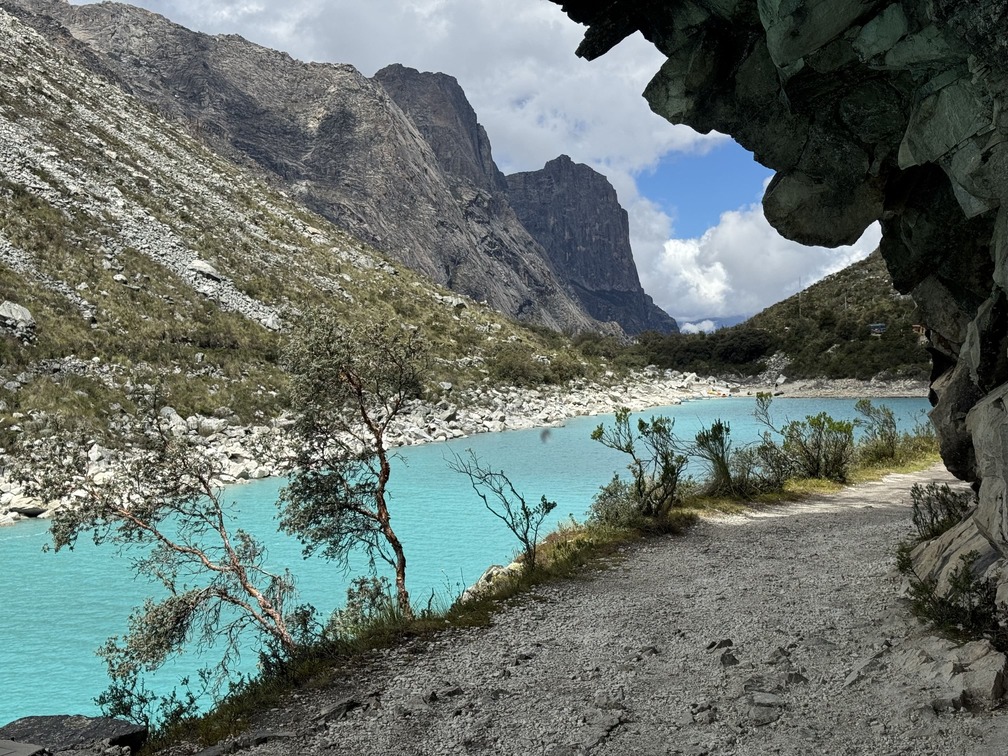
Laguna Parón
The road climbs directly to the lake, part of Parque Nacional Huascarán.

Start of the trek
Begin the walk to the viewpoint, or enjoy the lake without hiking.

Description
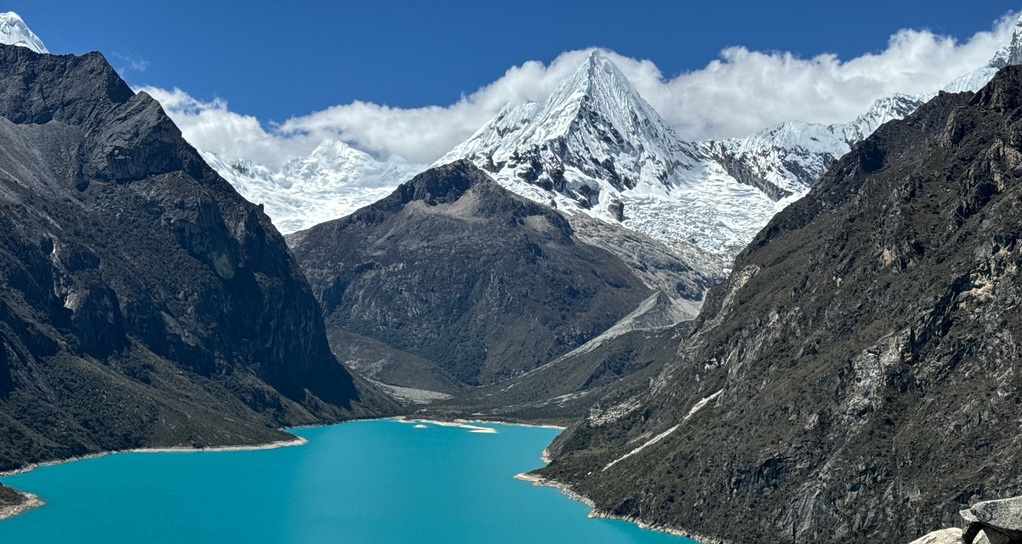
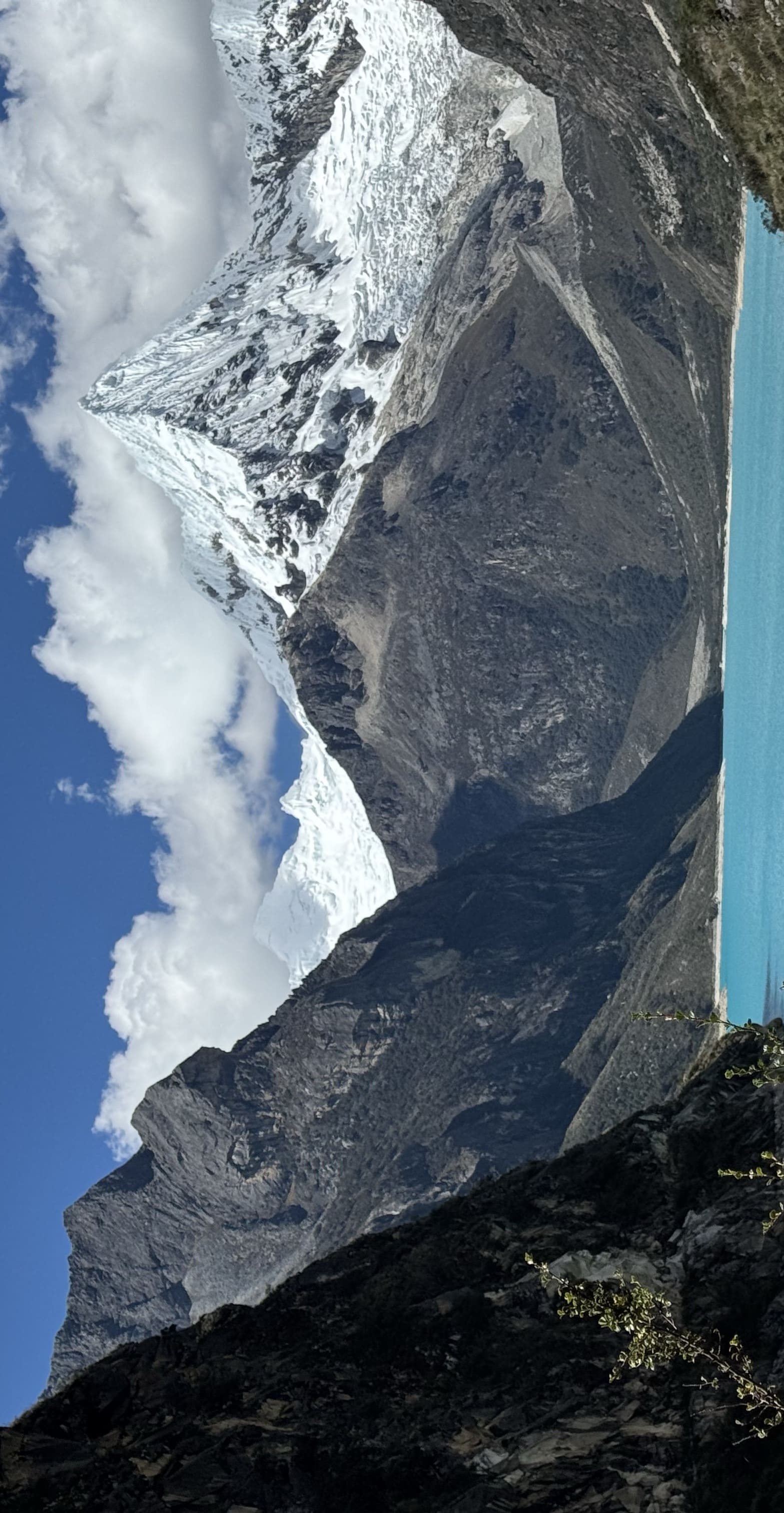
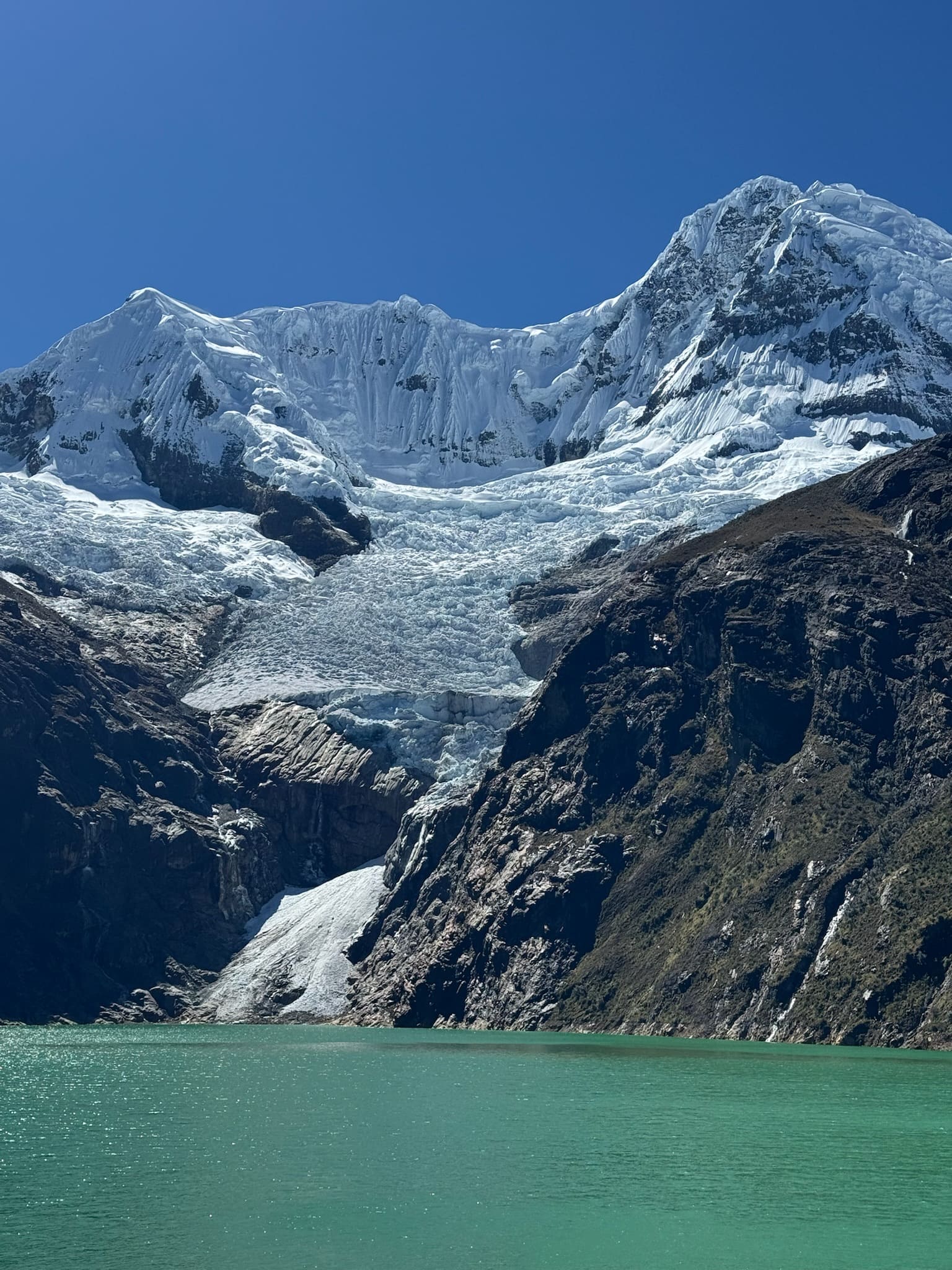
Laguna Parón is the largest lake in Parque Nacional Huascarán and one of the Cordillera Blanca's most impressive landscapes. Its intensely turquoise waters, surrounded by enormous snow-capped peaks and rock walls, create a scene that is hard to forget.
From the lake, you can see some of the Cordillera Blanca's main peaks, such as Huandoy, Pisco, Chacraraju, Pirámide and Artesonraju. La Esfinge also stands out: an enormous rock wall rising above the valley and one of the region's best-known climbing destinations.
To better enjoy the scenery, you can climb to the viewpoint for a broader view, or take a boat ride.
You can also continue to laguna Artesoncocha (10 km | +400 m | 4 h) and a small frozen lake.
Beyond its scenic value, Parón also has a history shaped by water use and management. With an estimated volume of 55 million cubic metres, the lake serves as a reservoir for Central Hidroeléctrica Cañón del Pato, managed for years by Duke Energy.
The use of water for electricity generation led to a conflict with the Cruz de Mayo community and the people of Caraz. They questioned the management of lake levels and water releases because of their possible impacts on water availability and quality, irrigation channels, agriculture and the local ecosystem. These differences over water resource management led to prolonged tensions between the community, the company and the authorities responsible for water management. Following a protest and peaceful occupation of the facilities, the Cruz de Mayo community took control of the lake. However, challenges remain concerning risk management, monitoring and conservation of this important ecosystem.
Did you know?
The formation of Artesoncocha is a visible example of glacial retreat in the Cordillera Blanca. During his travels between 1860 and 1873, Antonio Raimondi already observed small lakes appearing at glacier margins. One of the cases he described concerned a debris-covered glacier below Artesonraju, which eventually gave rise to today's laguna Artesoncocha. Its evolution shows how quickly these changes occur: between 2005 and 2015, its area increased by more than 1000% in just 12 years.


Flora and fauna
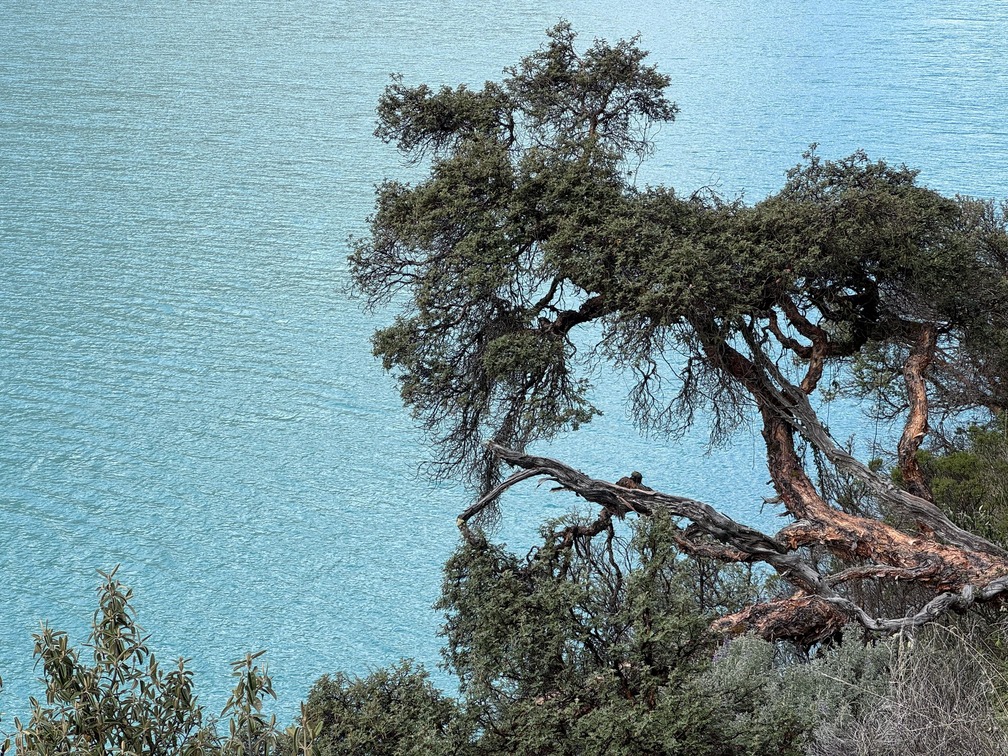
- Queñual trees
- Orchids
- Andean flowers
- Taya
- Mosses and lichens
- Cultivated fields
- Andean foxes
- Andean ducks
- Vizcachas
- Trout
- Andean deer
- Condors
Recommendations
Hiking shoes
Cap or hat
Sunglasses
Warm jacket
Rain jacket
Sunscreen
Water
Snacks and/or lunch
Map
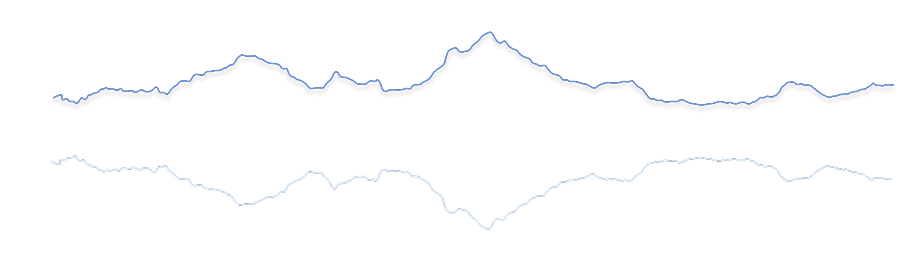
Map of Laguna Parón
GPS track to be added.
Trails can change. Do not use this space as a navigation guide.
Similar options
 Easy



 Easy
 Easy
 Easy
 Easy
 Easy
 Easy
 Easy
 Easy
 Easy
 Easy
 Easy
 Easy
 Easy
 Easy
 Easy